
How to Plan International Travel: A Complete Step-by-Step Guide
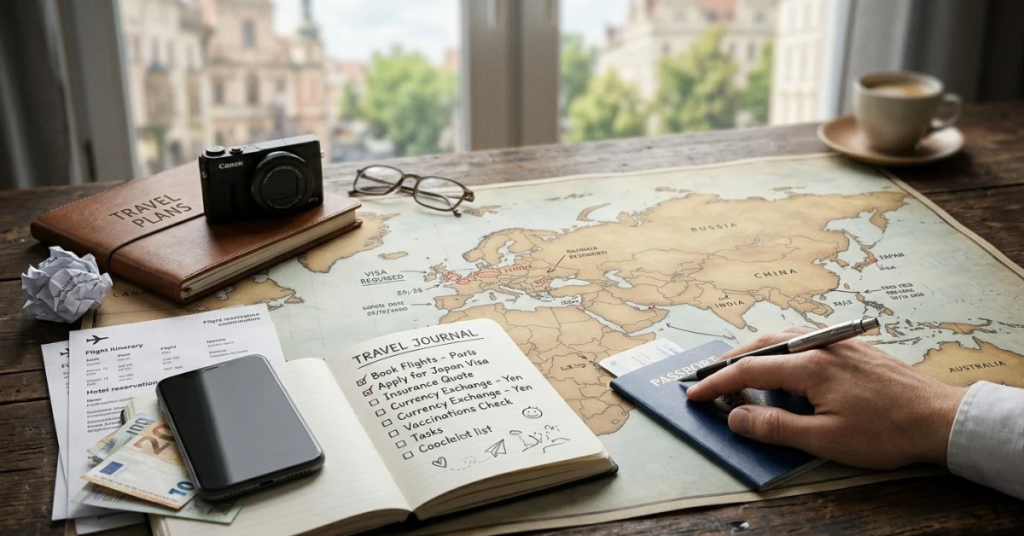
Quick answer: How To plan international travel, start 3 to 6 months ahead. Choose your destination and dates, set a budget, and check passport validity and visa rules. Then book flights, arrange lodging, buy travel insurance, sort out money and phone access, and build a flexible itinerary. Finish with a pre-departure checklist during the final two weeks.
Key Takeaways
- Start planning 3 to 6 months before departure (6 to 12 months for complex or peak-season trips).
- Check passport validity and visa rules first, because they can block a trip entirely.
- Many countries require a passport valid for at least six months beyond your arrival date, so confirm the rule for each destination.
- Buy travel insurance when you book, not at the airport.
- Build a budget with a 10 to 15 percent buffer for surprises.
- Share copies of key documents with someone you trust.
Your International Travel Planning Timeline
| When | What to Do |
|---|---|
| 6–12 months out | Pick a destination, set a budget, check passport validity, research visas |
| 3–6 months out | Book flights, apply for visas, choose lodging, buy insurance |
| 1–3 months out | Book tours and transport, check vaccines and health advice, notify your bank |
| 2–4 weeks out | Finalize your itinerary, arrange phone and money, download offline maps |
| 1 week out | Pack, print or save documents, confirm bookings, check in online |
Treat these dates as guidelines. Peak seasons, popular festivals, and visa processing times can push your schedule earlier.
Step 1: Choose Your Destination and Travel Dates
Start with your goals. Do you want beaches, cities, hiking, food, or culture? Then narrow your options using four filters:
- Budget: Daily costs vary enormously between regions.
- Season: Check weather, monsoons, and peak or shoulder seasons.
- Safety: Read your government’s current travel advisories.
- Entry rules: Confirm visa and vaccination requirements.
Shoulder seasons (the weeks just before or after peak) often bring lower prices and smaller crowds.
Step 2: Check Your Passport, Visas, and Entry Requirements
This step comes first because mistakes here are costly. Airlines can refuse boarding if your documents fall short.
- Check your passport expiry date. Many countries require at least six months of validity, and some require blank pages.
- Research visa requirements on your government’s travel site and the destination’s official embassy page.
- Apply early. Processing times range from minutes (some e-visas) to several weeks.
- Check transit rules. Some layovers require their own visas.
- Save digital and paper copies of every document.
Rules change often, so verify with official sources close to your departure date.
Step 3: Set a Realistic Budget
Build your budget around five core categories:
- Flights and transport
- Accommodation
- Food
- Activities and entry fees
- Insurance, visas, and fees
Add a buffer of 10 to 15 percent for surprises. Research daily costs in each destination and multiply by the number of days.
Budget travelers can cut costs with hostels, local transport, street food, and travel in the shoulder season. Families should price in larger rooms, meals for kids, and activities with family rates.
Step 4: Book Flights Strategically
- Compare flight search engines and airline sites.
- Use flexible-date search to find the cheapest days.
- Set fare alerts to track price drops.
- Check the total cost, including baggage, seat selection, and meals.
- Allow enough layover time, especially on separate tickets, where a delay can strand you.
Book flexible fares if your plans might shift. Avoid very tight connections on international itineraries.
Step 5: Arrange Accommodation
Choose lodging based on location, safety, reviews, and cancellation terms.
| Option | Best For | Watch Out For |
|---|---|---|
| Hostels | Solo and budget travelers | Noise, shared bathrooms |
| Hotels | Comfort and convenience | Higher cost |
| Short-term rentals | Families and groups | Cleaning fees, host rules |
| Guesthouses | Local experience | Limited amenities |
Read recent reviews, check the neighborhood on a map, and choose free cancellation when possible.
Step 6: Buy Travel Insurance
Insurance protects you from costs that can ruin a trip, including medical emergencies, cancellations, delays, and lost baggage.
Compare policies for:
- Medical coverage and emergency evacuation
- Trip cancellation and interruption
- Baggage and gear protection
- Coverage for activities you plan, such as hiking or diving
Read the exclusions, and buy the policy soon after you make your first non-refundable booking.
Step 7: Plan Health and Safety
- Visit a doctor or travel clinic 4 to 8 weeks before departure to discuss vaccines and medications.
- Carry prescriptions in original packaging, with a doctor’s note when needed.
- Check your home government’s travel advisory and register for traveler alerts if your country offers them.
- Save emergency numbers and your embassy’s contact details.
Check whether your health insurance covers you abroad, and buy supplemental coverage if it does not.
Step 8: Sort Out Money, Cards, and Phone Access
Money
- Tell your bank about your travel plans if it requires notice.
- Carry two cards from different networks, plus a small amount of local cash.
- Choose a card with no foreign transaction fees.
- Pay in the local currency when a terminal offers a choice, since conversion at the terminal usually costs more.
Phone and Internet
- Compare an eSIM, a local SIM, and your carrier’s roaming plan.
- Download offline maps and translation packs.
- Save key bookings and documents for offline access.
Step 9: Build a Flexible Itinerary
A good itinerary balances structure with free time.
- List your must-see places.
- Group sights by neighborhood to reduce travel time.
- Limit yourself to one or two major activities per day.
- Book popular attractions in advance.
- Leave open days for rest and discovery.
Overpacked schedules cause fatigue, especially for families with children.
Step 10: Pack Smart
Pack light and choose versatile clothes. Check airline baggage rules, and keep medications, documents, and valuables in your carry-on.
Include:
- Universal power adapter
- Reusable water bottle
- Copies of important documents
- A small first-aid kit
- Portable charger
Planning Tips by Traveler Type
First-Time International Travelers
- Choose an easier destination with good tourist infrastructure.
- Arrive during daylight and arrange your first night’s lodging in advance.
- Learn a few local phrases and basic customs.
Budget Travelers and Backpackers
- Travel in shoulder season.
- Mix paid days with free activities.
- Track spending daily with an app.
Families and Group Trip Organizers
- Assign roles, such as one person for bookings and one for finances.
- Use a shared document for the itinerary.
- Check each traveler’s passport, and confirm any extra rules for children, such as consent letters when only one parent travels.
- Plan around nap times, meals, and downtime.
Common International Travel Planning Mistakes
- Skipping the passport check. An expired or short-validity passport can end a trip before it starts.
- Booking non-refundable options too early. Confirm your visa and dates first.
- Ignoring total flight costs. Cheap fares can hide baggage fees.
- Overscheduling. Leave room for rest and surprises.
- Traveling without insurance. One emergency can cost more than the entire trip.
Final Pre-Departure Checklist
Two weeks before
- Confirm all bookings
- Check visa status and entry forms
- Set up phone and payment access
One week before
- Check in online when available
- Download offline maps and documents
- Share your itinerary with a trusted contact
Day before
- Charge devices
- Pack your carry-on essentials
- Double-check your passport and tickets
Frequently Asked Questions
How far in advance should I plan international travel?
Start 3 to 6 months ahead for most trips. Begin earlier if you need a visa, travel in peak season, or manage a large group.
What do I need first when planning international travel?
A valid passport. Check its expiry date and entry requirements before you book anything.
Do I need travel insurance for international trips?
It is not always required, but experts widely recommend it. Medical care and cancellations abroad can be expensive.
How much money should I bring?
Bring a small amount of local cash and rely on cards for larger purchases. Research local payment habits, since some regions use cash more heavily.
What is the best way to plan a trip for the first time?
Follow a timeline: documents first, then budget, flights, lodging, insurance, and itinerary.
Conclusion
Knowing how to plan international travel turns a stressful task into a manageable project. Check your documents first, set a realistic budget, book smart, protect yourself with insurance, and build a flexible itinerary. Follow these steps, and you will travel with confide