
Does Chase Sapphire Have Travel Insurance? What Preferred and Reserve Really Cover
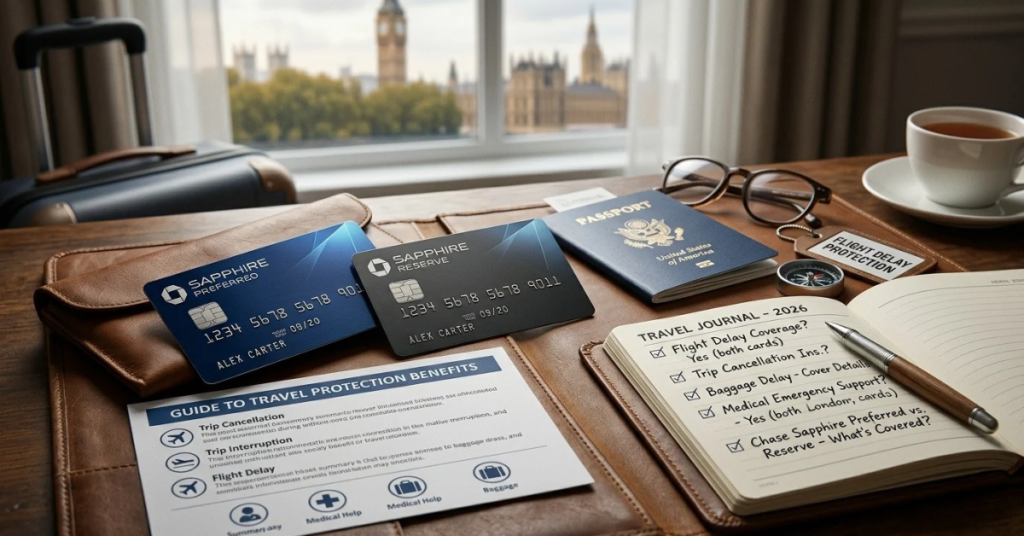
Yes. Does Chase Sapphire Have Travel Insurance Preferred and the Chase Sapphire Reserve include built-in travel protections, such as trip cancellation and interruption insurance, trip delay reimbursement, baggage coverage, and rental car coverage. You activate most of them by paying for your trip with the card or with Ultimate Rewards points.
These benefits do not replace a full travel insurance policy, though. The biggest gap is medical coverage: the Reserve reimburses up to $2,500 in emergency medical and dental costs, while the Preferred does not include that benefit. This guide explains what each card covers, how to file a claim, and when you may still want a standalone policy.
Key Takeaways
- Both cards include travel protections, and Chase says they apply to eligible trips booked with the card, through Chase Travel, or with Ultimate Rewards points.
- Trip cancellation and interruption reimburses up to $10,000 per covered traveler and $20,000 per trip on both cards.
- The Reserve adds a faster trip delay trigger (6 hours versus 12), emergency medical and dental coverage, roadside assistance, and higher rental car and accident limits.
- Claims move fast. For trip cancellation and interruption, Chase says to act within 20 days or as soon as reasonably possible.
- Read your Guide to Benefits. It is the document that controls what Chase will pay.
What Travel Insurance Does Chase Sapphire Include?
Chase calls these features “travel protection benefits.” They work like insurance for specific problems, but they carry lower limits and more conditions than a stand-alone policy.
Every Sapphire cardholder can use these benefits:
- Trip cancellation and interruption insurance for prepaid, nonrefundable trip costs
- Trip delay reimbursement for meals, lodging, and similar expenses
- Baggage delay insurance for essentials when your bags arrive late
- Lost luggage reimbursement for lost, damaged, or stolen baggage
- Auto rental coverage for theft and collision damage
- Travel accident insurance for accidental death or dismemberment
- Travel and emergency assistance for legal and medical referrals
Chase Sapphire Preferred vs. Reserve: Coverage Comparison
Use this table to compare the two cards. Figures come from Chase’s own Sapphire travel insurance guide, current as of 2026.
| Benefit | Sapphire Preferred | Sapphire Reserve |
|---|---|---|
| Trip cancellation and interruption | Up to $10,000 per covered traveler and $20,000 per trip | Same limits |
| Trip delay | Up to $500 per covered traveler after a delay of more than 12 hours or an overnight stay | Up to $500 per covered traveler after a delay of more than 6 hours or an overnight stay |
| Baggage delay | Up to $100 per day for up to 5 days, after a delay of over 6 hours | Same |
| Lost luggage | Up to $3,000 per covered traveler | Same |
| Auto rental coverage | Up to $60,000 for theft and collision damage on vehicles with an MSRP of $125,000 or less | Primary coverage up to $75,000 for most vehicles in the U.S. and abroad |
| Travel accident insurance | Up to $500,000 | Up to $1,000,000 |
| Emergency evacuation and transportation | Up to $100,000 (see the note below) | Up to $100,000 |
| Emergency medical and dental | Not included | Up to $2,500, with a $50 deductible |
| Roadside assistance | Not included | Up to $50 per incident, 4 times a year |
| Travel and emergency assistance | Included | Included |
Note on evacuation coverage: Chase’s 2026 guide lists emergency evacuation and transportation among its Sapphire protections, but some third-party reviews list it as a Reserve-only benefit. Confirm with your Guide to Benefits before you rely on it.
Benefit-by-Benefit Breakdown
Trip Cancellation and Interruption Insurance
This benefit reimburses prepaid, nonrefundable expenses when sickness, severe weather, or another covered situation cancels or cuts short your trip. Eligible costs include passenger fares, tours, and hotels.
Both cards cap reimbursement at $10,000 per covered traveler and $20,000 per trip. Some third-party reviews also report a $40,000 limit per account in a 12-month period, so check your guide for the current figure.
Remember: The policy pays only for covered reasons. It does not work like a “cancel for any reason” add-on that some stand-alone insurers sell.
Trip Delay Reimbursement
If your common carrier delays you, Chase reimburses unreimbursed expenses such as meals and lodging, up to $500 per covered traveler. The Preferred requires a delay of more than 12 hours or an overnight stay. The Reserve requires only more than 6 hours or an overnight stay.
That difference matters most to frequent flyers who face shorter delays.
Baggage Delay and Lost Luggage
When your bags arrive more than 6 hours late, Chase reimburses essential purchases, such as toiletries and clothing, up to $100 per day for up to 5 days.
If baggage is lost, damaged, or stolen during a covered trip, lost luggage reimbursement pays up to $3,000 per covered traveler.
Auto Rental Coverage
To trigger this benefit, decline the rental company’s collision damage waiver and charge the entire rental cost to your card. Reserve coverage is primary, so you do not need to file with your personal auto insurer first. Chase describes Preferred coverage as reimbursement up to $60,000, and several reviewers also call it primary coverage.
Coverage has limits on vehicle value and type, and it covers theft and collision damage rather than liability.
Travel Accident Insurance
When you pay for air, bus, train, or cruise transportation with your card, you may receive accidental death or dismemberment coverage. The Preferred offers up to $500,000, and the Reserve offers up to $1,000,000.
Emergency Evacuation, Medical, and Dental
Chase covers medical services and transportation up to $100,000 if you become injured or sick 100 miles or more from home and need an emergency evacuation.
The Reserve alone reimburses up to $2,500 for emergency medical and dental expenses, subject to a $50 deductible, when you travel 100 miles or more from home. If you hold a Preferred, you do not get that coverage.
How to Activate Your Chase Sapphire Travel Insurance
Chase does not make you enroll. Follow these steps to keep your coverage intact.
- Pay with the right method. Book your trip with your Sapphire card, through Chase Travel, or with Ultimate Rewards points.
- Keep your confirmations. Save receipts, itineraries, and booking emails.
- Check the benefit conditions. For rental cars, for example, charge the full cost to your card and decline the rental company’s collision coverage.
- Read your Guide to Benefits. It defines covered travelers, covered reasons, and exclusions.
- Know the claims number. Save chasecardbenefits.com and 1-800-350-1697 in your phone.
How to File a Claim
You can file at chasecardbenefits.com or by calling 1-800-350-1697. Gather your documentation early, because each claim type has its own deadline.
- Trip cancellation and interruption: Act within 20 days of the cancellation or interruption, or as soon as reasonably possible.
- Emergency medical and dental (Reserve): File within 90 days of receiving care.
- All claims: Submit receipts, proof of the delay or loss, and itinerary details.
Tip: Call the benefits administrator before you spend large sums, so you know what Chase will reimburse.
Does Chase Sapphire Have Travel Insurance for Family Trips?
Chase’s travel protections apply to you and eligible immediate family members who are covered travelers. The $20,000 per-trip cap limits total reimbursement for everyone on the same trip.
For a family of five with a large prepaid vacation, that cap may fall short. Review your guide’s definition of a covered traveler and add up your prepaid costs before you rely on the benefit.
What Chase Sapphire Travel Insurance Does Not Cover
Card benefits have limits. Watch for these common gaps.
- Medical expenses on the Preferred. The Preferred has no emergency medical and dental benefit.
- Low reimbursement caps. Third-party reviews note that card limits fall below many stand-alone plans.
- Covered reasons only. Chase pays for specific events, not every change of plans.
- Payment conditions. Eligible trips must be paid for with the card or Ultimate Rewards points.
- Exclusions. Every benefit comes with a list of exclusions in the Guide to Benefits.
Do You Still Need Stand-Alone Travel Insurance?
The answer depends on your trip. Use this table as a starting point, and review your own guide before you decide.
| Your trip | Chase Sapphire may be enough if… | Consider adding a policy if… |
|---|---|---|
| Domestic weekend trip | Your costs are modest and your health insurance travels with you | You prepaid a lot of nonrefundable costs |
| International family vacation | Your prepaid costs fall under the per-trip limit | You want medical coverage abroad or higher limits |
| Cruise or tour package | The package cost fits within the limits | Costs exceed $10,000 per person or $20,000 per trip |
| Trip with known health concerns | Your guide clearly covers your situation | You need broader medical coverage |
This article offers general information, not financial or insurance advice. Confirm details with Chase and with a licensed insurance professional.
Tips for Cardholders and Travel Hackers
- Book with Ultimate Rewards points. Chase says protections apply when you book with points.
- Match the card to the trip. If you travel often and want the 6-hour trip delay trigger, compare the Reserve against the Preferred.
- Document delays right away. Get written confirmation from the airline or carrier.
- Compare annual fees. Chase notes that both cards carry an annual fee, and one 2026 review lists the Preferred at $95 per year, so confirm current pricing before you apply.
- Review your guide yearly. Issuers can change benefits.
Common Mistakes to Avoid
- Paying with the wrong card and losing coverage.
- Waiting too long to file a trip cancellation claim.
- Assuming the Preferred includes medical coverage abroad.
- Accepting the rental company’s collision waiver, which can void your card’s coverage.
- Skipping the Guide to Benefits.
- Ignoring the per-trip limit on group or family trips.
Frequently Asked Questions
Does Chase Sapphire Preferred have travel insurance?
Yes. The Preferred includes trip cancellation and interruption insurance, trip delay reimbursement, baggage delay insurance, lost luggage reimbursement, auto rental coverage, and travel accident insurance. It does not include emergency medical and dental coverage.
Does Chase Sapphire Reserve have travel insurance?
Yes. The Reserve includes the same core protections with higher limits in some areas, plus a 6-hour trip delay trigger, emergency medical and dental coverage, and roadside assistance.
Does Chase Sapphire cover medical expenses abroad?
The Reserve reimburses up to $2,500 for emergency medical and dental expenses, with a $50 deductible, when you are 100 miles or more from home. The Preferred does not include that benefit, so consider other coverage for international trips.
Is Chase Sapphire rental car coverage primary?
Chase describes the Reserve coverage as primary, with up to $75,000 for theft and collision damage. For the Preferred, Chase lists coverage up to $60,000, and several reviewers call it primary. Confirm in your guide.
Do I need to buy the trip with my Sapphire card?
Yes. Chase says the protections apply to eligible reservations booked with your card, through Chase Travel, or with Ultimate Rewards points.
How do I file a Chase Sapphire travel insurance claim?
Visit chasecardbenefits.com or call 1-800-350-1697. For trip cancellation or interruption claims, act within 20 days or as soon as reasonably possible.
Does Chase Sapphire travel insurance cover my family?
Coverage extends to covered travelers, which typically includes eligible immediate family members. The per-trip limit applies to everyone combined.
Final Thoughts
Does Chase Sapphire Have travel insurance, and the protections can save you real money when plans go wrong. They work best as a safety net for prepaid trip costs, delays, and lost bags.
Before your next trip, read your Guide to Benefits, confirm your limits, and decide whether you need medical or higher-limit coverage on top. A few minutes of planning can save you thousands of dollars.