
How to Dress for Travel: What to Wear on Flights, Long-Haul Trips, and Business Journeys
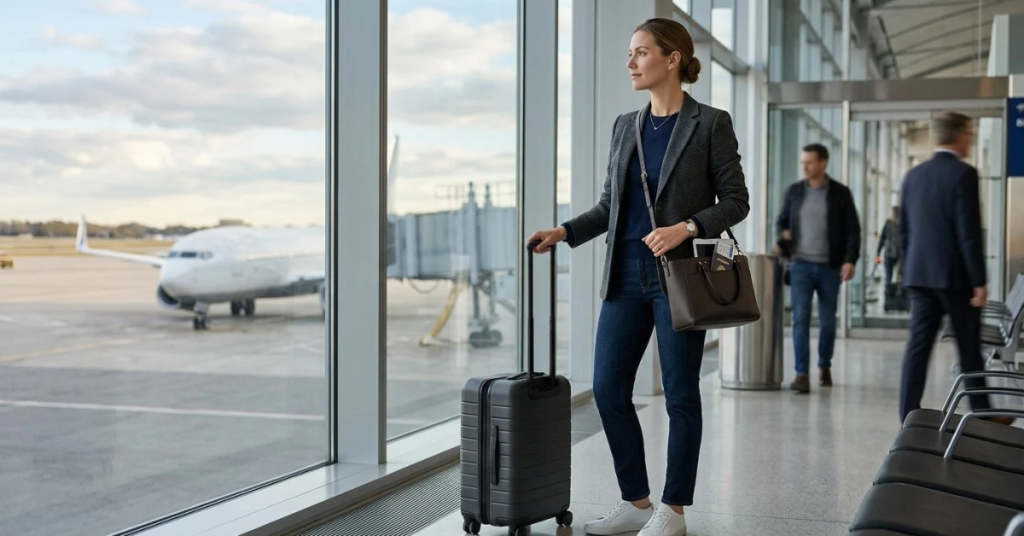
How To dress for travel, wear comfortable layers in breathable, wrinkle-resistant fabrics, choose easy-on shoes, and keep metal accessories minimal. Your outfit has three jobs: keep you comfortable while you sit for hours, move you smoothly through airport security, and leave you presentable when you arrive.
This guide shows you exactly how to dress for travel on short flights, long-haul journeys, carry-on-only trips, and business assignments. You will find outfit formulas, a fabric comparison, security tips, and a printable checklist.
Key Takeaways
- Layer your clothing. Cabin temperatures swing, and layers give you control.
- Choose loose, stretchy fits on long flights. Health guidance advises loose-fitting clothing, and compression socks can help some travelers.
- Wear easy shoes. Slip-ons and sneakers speed up security and handle swollen feet.
- Wear your bulkiest items. Your heaviest jacket and shoes save carry-on space.
- Plan an arrival outfit. Business travelers and tourists both look better when they pack one fresh, wrinkle-resistant layer.
The Four-Part Travel Outfit Formula
Use this formula to build an outfit for any trip.
| Part | What it means | Example |
|---|---|---|
| Comfort | Soft, stretchy, and not restrictive | Jersey tee, relaxed trousers, or leggings |
| Layers | Pieces you can add or remove | Cardigan, light jacket, or scarf |
| Security-ready | Minimal metal and easy-to-remove items | Slip-on shoes and a simple belt or none |
| Arrival-ready | Presentable after hours in a seat | Wrinkle-resistant fabric in a neutral color |
What to Wear on a Plane, Head to Toe
Tops and Layers
Choose a breathable base layer, such as a cotton blend, merino wool, or a technical knit. Add a cardigan, hoodie, or light jacket you can remove quickly.
A large scarf or wrap works as a blanket, a pillow, and an extra layer. It also dresses up a simple outfit.
Bottoms
Pick stretch trousers, joggers, relaxed jeans, or a flowing skirt. Avoid tight waistbands and rigid fabrics that dig in when you sit.
Health guidance from sources such as UCLA Health advises loose-fitting clothing on long trips, so leave the skinny jeans for another day.
Shoes and Socks
Wear closed, supportive shoes that you can slip on and off. Feet often swell during flights, so choose a pair with some room.
Airlines advise passengers to remove high heels before using an evacuation slide, and sturdy closed shoes make any emergency easier. Bring a pair of clean socks, since you may want to take your shoes off during the flight.
Accessories
Keep accessories simple. Skip chunky metal jewelry, heavy watches, and large belt buckles, since metal can trigger extra screening.
How to Dress for Travel by Flight Length
Flight duration changes your priorities.
| Flight length | Main priorities | Outfit tip |
|---|---|---|
| Under 4 hours | Convenience and security speed | Layered casual outfit and slip-on shoes |
| 4 to 8 hours | Comfort and circulation | Loose fit, stretch fabric, and a warm layer |
| 8+ hours (long-haul) | Comfort, circulation, and sleep | Soft layers, compression socks if suitable, and cozy socks |
The 4-hour line comes from health research. The CDC’s 2026 Yellow Book says the risk of symptomatic blood clots is negligible for flights under four hours, and it notes that the increase in risk comes mainly from prolonged limited mobility.
Dressing for Long-Haul Flights
Long-haul comfort matters more than fashion. Follow these steps.
- Wear loose, stretchy clothing that lets you shift positions.
- Consider compression socks. The CDC Yellow Book says graduated compression stockings appear to reduce asymptomatic deep vein thrombosis in travelers and are generally well tolerated. A 2021 Cochrane review of 12 trials with 2,918 passengers found that they also reduced leg swelling, according to Gulf News.
- Get a proper fit. Ask a pharmacist or doctor about size and compression level, especially if you have circulation problems or a history of clots.
- Move regularly. Walk the aisle when it is safe and flex your calves in your seat.
- Layer for sleep. Wear a hoodie or wrap, and carry an eye mask and warm socks.
- Skip the tight shoes. Choose room over style on long flights.
This article offers general information, not medical advice. If you have a medical condition or a history of blood clots, ask your doctor before you fly.
What to Wear Through Airport Security
Smart clothing choices keep you moving.
Shoes
On July 8, 2025, the Department of Homeland Security announced that travelers no longer need to remove their shoes at U.S. TSA checkpoints. Officers can still ask you to remove them for additional screening, and shoes with lots of metal can trigger alarms.
Rules differ at airports outside the United States, so follow local signs and officer instructions. Slip-on shoes still save time if you get pulled aside.
Jackets and Belts
Coats and jackets go through the X-ray in standard lanes, so choose layers you can remove quickly. TSA PreCheck members usually keep belts and light jackets on.
A simple belt without a large metal buckle avoids extra screening. You can also wear trousers that do not need a belt.
Pockets and Metal
- Empty your pockets before the line, and move keys, coins, and phones into your bag.
- Skip bulky jewelry or put it on after you clear security.
- Avoid metal-heavy clothing, such as large hardware, studs, or heavy zippers.
Fit and Layers
Some travel guides note that very bulky or oversized layers can invite extra screening. A well-fitting outfit with one removable layer is simpler.
Best Fabrics for Travel Clothing
The right fabric makes a big difference.
| Fabric | Strengths | Drawbacks |
|---|---|---|
| Merino wool | Odor-resistant, temperature-regulating, and wrinkle-resistant | Higher price |
| Cotton blends | Soft and breathable | Can wrinkle and dry slowly |
| Linen | Cool in heat | Wrinkles easily |
| Polyester and nylon blends | Wrinkle-resistant and quick-drying | Less breathable |
| Jersey and stretch knits | Comfortable and easy to pack | Can look casual |
| Heavy denim | Durable | Bulky and slow to dry |
Tip: A blend of natural fibers and a little stretch often gives the best mix of comfort and polish.
How to Dress for Travel With Only a Carry-On
Carry-on-only travel rewards planning. A capsule wardrobe lets you mix and match a small set of pieces.
Capsule Wardrobe Steps
- Pick a color palette. Choose two or three neutrals and one accent color.
- Choose versatile pieces. Every top should work with every bottom.
- Wear your bulkiest items on the plane. Heavy jackets, boots, and sweaters take up the most space.
- Plan to do laundry. Quick-drying fabrics let you pack less.
- Pack in rolls or cubes to cut wrinkles and save room.
Sample Capsule Starting Point
Use this as a flexible template, not a fixed rule. Adjust it to your climate and trip length.
| Item | Suggested quantity | Why it works |
|---|---|---|
| Tops | 3 to 5 | Mix and match with every bottom |
| Bottoms | 2 to 3 | Cover casual and dressier outings |
| Layering piece | 1 to 2 | Handles temperature changes |
| Dress or smart outfit | 1 | Covers nicer dinners or meetings |
| Shoes | 2 (one worn, one packed) | Balances comfort and style |
| Underwear and socks | Enough for several days | Wash on longer trips |
| Scarf or wrap | 1 | Adds warmth and polish |
How to Dress for Travel as a Business Traveler
Business trips demand a polished look after hours in transit. Use these approaches.
- Fly in a smart-casual outfit. Wear a wrinkle-resistant blazer, knit trousers, and comfortable dress shoes or clean leather sneakers.
- Carry a fresh layer. Pack a spare shirt or blouse in your carry-on in case of spills or delays.
- Choose travel-friendly fabrics. Wool blends, performance knits, and wrinkle-resistant weaves hold their shape.
- Pack a steamer or use hotel steam. Hang clothes in the bathroom while you shower.
- Keep a grooming kit in your carry-on. Include a small brush, mints, and deodorant.
- Plan for same-day meetings. Dress for the meeting, and add a comfortable layer for the flight.
| Trip type | Outfit approach |
|---|---|
| Same-day return | Wear your meeting outfit, and bring flat shoes for airports |
| Overnight stay | Wear a smart-casual outfit, and pack one fresh shirt |
| Conference week | Build a mix-and-match capsule around two neutral blazers |
How to Dress for Travel as a Style-Conscious Tourist
You can look good and stay comfortable. Focus on a few well-chosen pieces.
- Pick day-to-night pieces, such as a neutral jacket, a versatile dress, or dark denim.
- Choose walking shoes that look good. Comfortable leather sneakers or supportive flats work in most cities.
- Use accessories sparingly. A scarf, a simple bag, and a watch add polish without clutter.
- Check local dress norms. Many religious sites and conservative regions expect covered shoulders and knees.
- Pack a crossbody or zippered bag to keep valuables close.
Dress for Your Destination
Match your clothing to the climate and the culture.
| Destination type | What to wear | Watch-outs |
|---|---|---|
| Hot and humid | Light, breathable fabrics and a hat | Sunburn and dehydration |
| Cold | Thermal base layers, a warm coat, and gloves | Wet feet and wind chill |
| Desert | Long, light layers and sun protection | Big temperature swings between day and night |
| City sightseeing | Comfortable shoes and a day bag | Long walking days |
| Religious or conservative sites | Modest, covering clothing | Entry rules that vary by site |
Tip: Check the local forecast and cultural guidance a few days before you leave.
What Not to Wear When You Travel
- Tight waistbands or restrictive jeans that dig in during long flights
- New shoes you have not broken in
- High heels for long walking days or flights
- Excess metal jewelry that triggers alarms
- Offensive or revealing clothing, since airlines can refuse boarding under their contract of carriage
- Only one thick layer, which leaves you stuck when the cabin warms up
- White or light clothing if you expect spills on a long flight
Your Travel Outfit Checklist
- Check the forecast for departure and arrival cities.
- Choose a comfortable base layer in a breathable fabric.
- Add a removable layer for cabin temperature changes.
- Pick easy-on, supportive shoes.
- Limit metal accessories.
- Pack compression socks if they suit you.
- Carry a scarf or wrap.
- Pack a spare top in your carry-on.
- Empty your pockets before security.
- Keep your ID, boarding pass, and medication handy.
Common Mistakes When Dressing for Travel
- Dressing for style instead of sitting. Comfort comes first on long flights.
- Ignoring cabin temperature. Cabins can run cold or warm, so layers matter.
- Wearing difficult shoes. Complicated laces and boots slow you down.
- Overpacking. A capsule wardrobe beats a heavy bag.
- Skipping the arrival outfit. A fresh layer makes a big difference.
- Forgetting local dress norms.
Frequently Asked Questions
How should I dress for travel?
Dress in comfortable layers made from breathable, wrinkle-resistant fabrics. Choose easy shoes and limit metal accessories.
What should I wear on a long flight?
Wear loose, stretchy clothing, a warm layer, and supportive shoes with room for swelling. Consider compression socks and ask your doctor if you have clot risk factors.
Do I have to take my shoes off at airport security?
At U.S. TSA checkpoints, shoe removal is no longer required since July 8, 2025, but officers can still ask you to remove them. Rules vary at airports outside the United States.
Are jeans okay for flying?
Yes, if they are comfortable and not too tight. Stretch denim or relaxed fits work best on long flights.
What should business travelers wear on a plane?
Wear a smart-casual outfit with a wrinkle-resistant blazer and comfortable shoes. Pack one fresh shirt in your carry-on for a quick change.
What should I wear for carry-on-only travel?
Wear your bulkiest items, such as jackets and boots, and pack a capsule wardrobe in a neutral palette. Choose quick-drying fabrics so you can wash clothes on the road.
Do compression socks really help on flights?
Research suggests graduated compression stockings reduce symptomless blood clots and leg swelling for many travelers. The CDC says they appear to help but are not a substitute for movement.
Final Thoughts: Dress for the Journey and the Arrival
The best travel outfit blends comfort, convenience, and polish. Layer smartly, choose easy shoes, and pick fabrics that handle hours of sitting.
Build your outfit around the checklist above, and pack one fresh layer for your arrival. Then enjoy a smoother, more comfortable trip from door to door.