
How Long to Travel to Mars? Travel Time, Missions, and Human Journey Explained (2026 Guide)
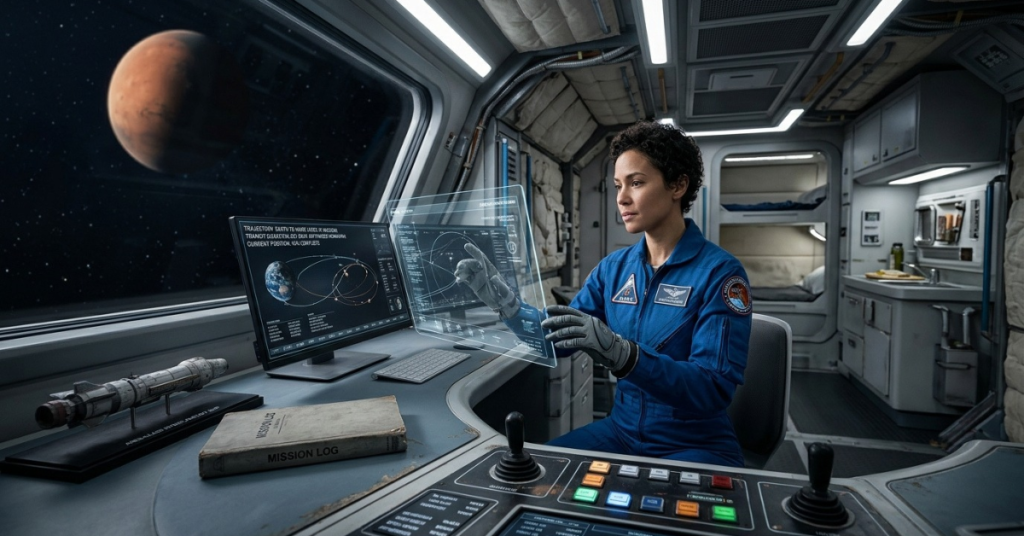
A typical robotic trip to Mars takes about 6 to 9 months. NASA’s Perseverance rover needed roughly 6.5 months, while the Curiosity rover needed about 8.5 months. A crewed mission would take a similar time each way, but a full round trip, including a stay on the surface, would last about three years.
The exact travel time depends on when you launch, which path you fly, and how much fuel your spacecraft carries.
Key Takeaways
- One-way robotic trip: about 6 to 9 months with today’s chemical rockets.
- Human round trip: roughly three years, including a long stay on Mars.
- Launch windows: Earth and Mars align for efficient launches about every 26 months.
- Distance: Mars sits anywhere from about 54.6 million km to about 401 million km from Earth.
- Next windows: one opens now (late 2026), and the following one runs from December 2028 to January 2029.
How Far Away Is Mars?
The distance between Earth and Mars changes constantly because both planets orbit the Sun at different speeds. NASA lists Mars as roughly 225 million km (140 million miles) from Earth on average.
| Measure | Distance |
|---|---|
| Closest approach | About 54.6 million km (33.9 million miles) |
| Average distance | About 225 million km (140 million miles) |
| Farthest distance | About 401 million km (250 million miles) |
Spacecraft do not fly in a straight line, so the distance they travel exceeds the gap between the planets. Perseverance, for example, covered about 293 million miles (472 million km) on its journey.
How Long Did Past Missions Take to Reach Mars?
Real missions give the best answer to how long it takes to travel to Mars. This table shows the approximate flight time for well-known spacecraft.
| Mission | Launch | Arrival | Approximate travel time |
|---|---|---|---|
| Mariner 4 (flyby) | Nov 1964 | July 1965 | About 7.5 months |
| Curiosity (rover) | Nov 2011 | Aug 2012 | About 8.5 months |
| MAVEN (orbiter) | Nov 2013 | Sept 2014 | About 10 months |
| InSight (lander) | May 2018 | Nov 2018 | About 6.7 months |
| Hope Probe (UAE orbiter) | July 2020 | Feb 2021 | About 6.7 months |
| Perseverance (rover) | July 2020 | Feb 2021 | About 6.5 months (203 days) |
Most modern missions land in the six-to-nine-month range. Slower trajectories save fuel, while faster ones demand more propellant.
Why the Travel Time to Mars Varies
Several factors change how long a Mars trip takes.
1. The Launch Window
Earth and Mars line up well for launch about every 26 months. Launching inside that window lets a spacecraft use the least fuel. Missing it means waiting more than two years.
2. The Trajectory
The most fuel-efficient path, called a Hohmann transfer orbit, takes about 259 days. Many missions fly slightly faster trajectories that cost more fuel but save weeks.
3. Spacecraft Mass and Propulsion
Heavier spacecraft need more fuel to speed up. Chemical rockets set the limit for current missions.
4. The Mission Goal
A flyby arrives faster than an orbiter or lander, because the spacecraft does not need to slow down. Slowing down requires fuel or aerobraking, and that adds time and mass.
When Are the Next Mars Launch Windows?
A new Mars transfer window opens in November and December 2026. The window after that runs from December 2028 to January 2029.
Here is what the current window means:
- Japan’s MMX mission plans to launch in this window to study Mars’s moons, Phobos and Deimos.
- NASA’s ESCAPADE twin spacecraft launched in 2025 and wait in a holding orbit near Sun-Earth Lagrange Point 2 for this window.
- SpaceX had targeted this window for uncrewed Starships, but reports from Reuters and the Wall Street Journal in February 2026 said the company put off the plan and prioritized the Moon.
- China’s Tianwen-3 sample return mission targets the 2028 window.
- ESA’s Rosalind Franklin rover also targets a 2028 launch.
Launch dates slip often, so confirm current status before you cite any specific mission.
How Long Would It Take Humans to Travel to Mars?
Humans would likely take six to nine months each way using chemical propulsion. The full mission lasts much longer because Earth and Mars must realign for the return trip.
Mission Types
| Mission type | Surface stay | Total mission length | Trade-off |
|---|---|---|---|
| Conjunction class (long stay) | About 500 days | Roughly three years | Lower fuel needs, longer time away |
| Opposition class (short stay) | A few weeks | Shorter overall | Higher fuel needs and more complex flight path |
Most mission planners favor the long-stay approach because it needs less fuel and carries less risk.
What Would the Journey Look Like?
- Launch and departure: The crew leaves Earth orbit on a transfer trajectory.
- Cruise: The spacecraft coasts for about six to nine months.
- Arrival and landing: The crew slows down, enters the atmosphere, and lands.
- Surface stay: Astronauts work on Mars until the planets align again.
- Return: The crew launches home and faces another months-long cruise.
Challenges of a Long Mars Journey
A months-long trip creates serious engineering and health problems.
- Radiation: NASA’s Curiosity rover measured an average of about 1.8 millisieverts per day of radiation during its trip to Mars. Astronauts would absorb a large dose over a round trip.
- Communication delay: Signals take between about 3 and 22 minutes to travel one way, depending on planetary positions.
- Life support: Crews need food, water, air, and spare parts for years.
- Muscle and bone loss: Long periods in microgravity weaken the body.
- Psychology: Isolation and confinement strain crews over many months.
- Landing: Mars’s thin atmosphere makes landing heavy spacecraft extremely difficult.
Can We Make the Trip Faster?
Engineers study several ways to shorten the trip.
| Technology | How it could help | Status |
|---|---|---|
| Nuclear thermal propulsion | Delivers more thrust per unit of fuel, which could cut transit time | Studied; not yet flown for Mars |
| Nuclear electric propulsion | Efficient, continuous thrust over long periods | In research and development |
| Advanced chemical rockets | Larger rockets carry more fuel | In use and in development |
| Aerobraking | Saves fuel when slowing down | Proven on robotic missions |
No propulsion system has yet proven it can make a crewed Mars trip dramatically faster. Shorter trips also reduce radiation exposure, so faster propulsion remains a major research goal.
What Is the Status of Human Missions to Mars?
No crewed Mars mission has a firm launch date. SpaceX had once aimed to fly uncrewed Starships to Mars in the 2026 window, but Reuters reported in February 2026 that the company told investors it would prioritize the Moon first and attempt Mars later.
Elon Musk said at the time that SpaceX still plans to begin building a Mars city in about five to seven years, but he described the Moon as the faster priority. Timelines from any company or agency can change, so treat them as targets rather than promises.
Fun Comparison: How Long Would a Trip to Mars Take by Car or Plane?
This comparison helps students grasp the scale. It uses the closest Earth-Mars distance of about 54.6 million km and ignores the fact that you cannot actually drive to space.
| Vehicle | Speed | Time to cover 54.6 million km |
|---|---|---|
| Car | 100 km/h | About 62 years |
| Passenger jet | 900 km/h | About 7 years |
| Spacecraft (Perseverance average) | About 97,000 km/h | About 6.5 months (along its curved path) |
Spacecraft travel so much faster than cars or planes because they use orbital mechanics and the Sun’s gravity to move at very high speeds.
Classroom Activity: Calculate Mars Travel Time
Teachers can use this simple exercise.
Step 1: Take Perseverance’s distance, about 472 million km.
Step 2: Divide it by its travel time, about 203 days (4,872 hours).
Step 3: Calculate the average speed: roughly 97,000 km/h.
Step 4: Ask students to estimate how long a spacecraft would need to cover the average Earth-Mars distance of 225 million km at 100,000 km/h. The answer is roughly 94 days, but real spacecraft cannot fly straight lines because planets move and gravity bends their paths.
This exercise shows why orbital mechanics, not simple speed, controls travel time.
Common Myths About Traveling to Mars
- “Mars is only a few weeks away.” No. Current robotic missions take about six to ten months.
- “You can launch any day.” No. Efficient launches cluster in windows about 26 months apart.
- “A crewed mission takes seven months total.” No. The one-way cruise takes months, and the round trip takes about three years.
- “Faster rockets already exist.” Not for Mars. Current propulsion limits trip speed.
- “The distance never changes.” No. It ranges from about 54.6 million km to about 401 million km.
Frequently Asked Questions
How long does it take to travel to Mars with current technology?
It takes about six to nine months for most robotic missions. A human crew would need a similar time each way.
What is the fastest trip to Mars so far?
Some early flyby missions took roughly four months, but they did not orbit or land. Modern landers and orbiters typically need six months or more.
How long is a round trip to Mars?
A crewed round trip would last roughly three years, because astronauts would wait on Mars for the planets to realign before they return.
How far is Mars from Earth?
Mars lies about 54.6 million km away at closest approach, about 225 million km on average, and about 401 million km at its farthest.
Why do Mars launches happen every 26 months?
Earth and Mars orbit the Sun at different speeds. They align favorably for low-energy transfers about every 26 months.
When is the next chance to launch to Mars?
A window opens in late 2026, and the following one runs from December 2028 to January 2029.
Will humans land on Mars soon?
No agency has announced a firm crewed landing date. Plans exist, but technology, funding, and safety challenges remain.
How long does a signal take to reach Mars?
A radio signal needs about 3 to 22 minutes one way, depending on where Earth and Mars sit in their orbits.
Final Checklist: What to Remember
- Robotic trips take about 6 to 9 months.
- Human round trips take about three years.
- Launch windows open about every 26 months.
- Distance ranges from about 54.6 million to 401 million km.
- Radiation, life support, and communication delays remain major challenges.
Conclusion
So, how long does it take to travel to Mars? About six to nine months one way today, and roughly three years for a crewed round trip. Orbital mechanics, launch windows, and propulsion limits shape every journey.
As new technology develops and more missions launch, those numbers may shrink. For now, the journey to the Red Planet remains a long, carefully planned voyage.