
How to Become a Travel Advisor: A Step-by-Step Guide for 2026
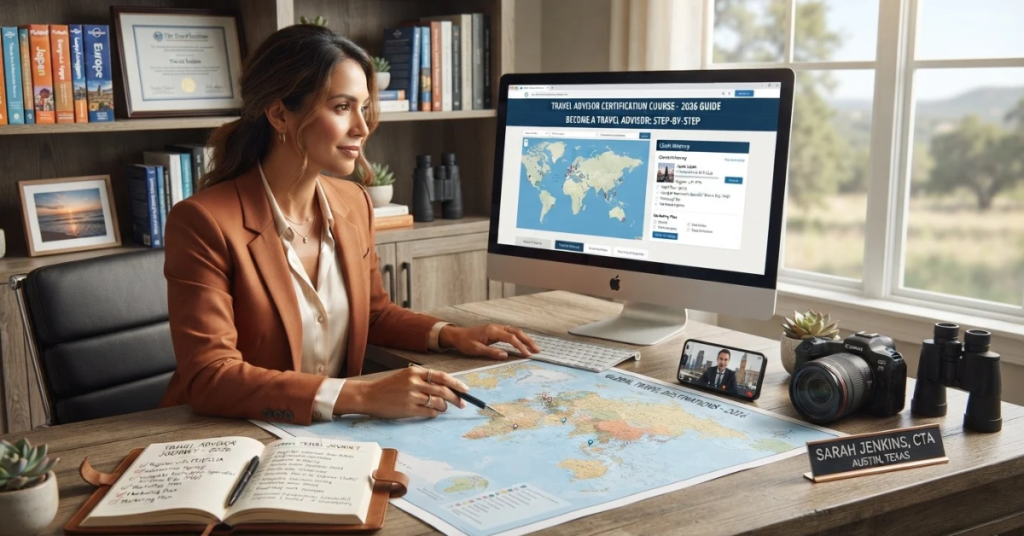
How To become a travel advisor in the United States, you do not need a college degree or a federal license. Most people follow the same path: pick a niche, complete training, join a host agency that supplies industry accreditation, register where state law requires it, and start booking trips for clients.
This guide shows you how to become a travel advisor, step by step. You will learn what the work pays, which states require registration, how host agencies compare, and how to build a luxury or niche business from home.
Key Takeaways
- No federal license exists. Advisors generally need no degree or national license to sell travel in the U.S.
- A few states require registration. California, Florida, Hawaii, and Washington require Seller of Travel registration, and sources report that Maryland joins them on October 1, 2026.
- Most beginners join a host agency. A host supplies accreditation, booking tools, supplier relationships, and training in exchange for a share of your commissions.
- Income varies widely. The U.S. Bureau of Labor Statistics reports a median pay of $50,160 for travel agents in May 2025, and independent earnings range from a few thousand dollars part-time to six figures for established advisors.
- Plan for a slow start. Suppliers often pay commission only after the trip is complete, so cash flow lags behind bookings.
What Does a Travel Advisor Do?
A travel advisor plans, books, and manages trips for clients. People also use the titles travel agent and travel consultant for the same job.
Advisors earn money in two main ways:
- Supplier commissions paid by hotels, cruise lines, tour operators, and other suppliers
- Planning or service fees paid by clients for research, itinerary design, and ongoing support
Good advisors do more than book. They save clients time, solve problems during trips, and bring specialist knowledge that online search cannot match.
Do You Need a License to Be a Travel Advisor?
No national license applies, but a few states regulate travel sellers. Use this table to see where you stand.
| Requirement | Status | What to know |
|---|---|---|
| Federal license | Not required | No national travel advisor license exists |
| College degree | Not required | Training helps, but no degree is mandatory |
| Seller of Travel registration | Required in some states | California, Florida, Hawaii, and Washington, plus Maryland from October 1, 2026, according to industry sources |
| Industry certifications | Optional | ASTA, CLIA, and The Travel Institute offer credentials |
| IATA or CLIA accreditation | Needed to book and earn commission | Most beginners get access through a host agency |
How Seller of Travel Rules Work
These rules apply to advisors who sell travel to residents of the regulated states, regardless of where the advisor is located. In practice, host agencies usually hold the registration and cover you under it.
Florida, for example, lists a lower filing fee for independent sales agents who work under a registered seller. Confirm current fees and contract requirements directly with each state before you sell.
Heads up: Some older lists still include Iowa, which ended its requirement in 2020. Check the state’s own website for the latest rules.
Rules differ outside the U.S. For example, the UK uses ATOL protection for certain flight-inclusive packages, so research your own country’s requirements.
How Much Do Travel Advisors Earn?
The BLS reports these figures for travel agents:
- Median pay: $50,160 per year (May 2025)
- Jobs: About 61,500 in 2025
- Outlook: Little or no change from 2025 to 2035
These numbers describe employed agents. Independent advisors earn commission, so your income depends on how many trips you book, what they cost, your niche, and your commission split. Host agency sources describe annual income that ranges from a few thousand dollars part-time to six figures for established full-time advisors.
Be realistic. Most new advisors build slowly, and your first year may bring modest income while you earn trust and referrals.
Choose Your Path to Becoming a Travel Advisor
| Path | Best for | Pros | Trade-offs |
|---|---|---|---|
| Independent advisor under a host agency | Side hustlers and career changers | Low startup cost, training, and accreditation access | You share commissions with the host |
| Franchise | People who want a proven system | Branding, support, and structure | Franchise fees and rules |
| Your own accredited agency | Experienced entrepreneurs | Full control and 100% of supplier commission | Higher costs, compliance, and infrastructure |
| Employee at an agency | People who want a steady salary | Mentoring and stable pay | Less flexibility and lower upside |
Going independent means obtaining your own accreditation, which usually requires meeting sales and business criteria. Most new advisors are not there yet, so a host agency is the common first move.
How to Become a Travel Advisor: 10 Steps
Step 1: Decide Why You Want the Job
Decide whether you want side income, a full-time career, or your own agency. That choice shapes your time commitment, your budget, and your niche.
Step 2: Choose a Niche
A clear niche makes you easier to find and easier to trust. Match your niche to your experience and interests.
| Niche | Typical client | Skill to build |
|---|---|---|
| Luxury travel | High-spending couples and families | Supplier relationships and personal service |
| Honeymoons and destination weddings | Engaged couples | Group logistics and romance-focused planning |
| Safari and adventure | Active travelers | Destination expertise and trip safety knowledge |
| Cruises | Families and retirees | Ship and itinerary comparison |
| Wellness and culinary travel | Experience seekers | Local partners and itinerary design |
| Multigenerational and family travel | Large family groups | Complex logistics |
| Accessible travel | Travelers with mobility needs | Detailed accessibility research |
| Corporate and group travel | Employers and organizations | Policy knowledge and volume booking |
Step 3: Learn the Business
Learn how commissions work, how suppliers pay, and how to price your time. Study airlines, hotels, cruises, tour operators, and travel insurance basics.
Step 4: Complete Training and Certification
Credentials are optional, but they build confidence and credibility.
- ASTA’s Verified Travel Advisor (VTA): ASTA calls it the profession’s credentialing standard. You need active ASTA membership and must meet experience-based eligibility requirements.
- The Travel Institute: Offers the optional TAP credential, which one guide lists at $95, plus other designations such as the Certified Travel Associate (CTA).
- CLIA: Provides cruise-focused certification.
- Supplier academies: Hotels, cruise lines, and tour operators offer free training and specialist designations.
Step 5: Pick a Host Agency
A host agency provides your IATA or CLIA accreditation, a back-office system, supplier relationships, and usually training and community. Compare hosts carefully.
| What to compare | Why it matters |
|---|---|
| Commission split | Guides describe 70/30 as a common starting point and report ranges from 70/30 to 90/10 in the advisor’s favor |
| Partner relationships | A 70% share of a higher partner commission can outearn an 80% share of a standard commission |
| Fees | Some hosts charge monthly or one-time fees, and some charge none |
| Training and mentoring | Strong support speeds your first bookings |
| Technology | Booking tools, CRM, and itinerary software save time |
| Niche fit | Some hosts specialize in luxury, cruises, or groups |
| Compliance | Ask which Seller of Travel states the host covers |
| Contract terms | Check exclusivity and exit rules |
Step 6: Set Up Your Business
- Choose a structure, such as sole proprietorship or LLC, and register your business name.
- Get an EIN from the IRS.
- Open a business bank account.
- Check local permits and zoning rules if you work from home.
- Ask about errors and omissions (E&O) insurance, and find out whether your host provides it.
- Confirm tax obligations with a CPA.
Step 7: Build Supplier Relationships
Sign up for supplier agent programs and complete their training. Ask about familiarization trips, which let you experience destinations and properties firsthand.
Step 8: Price Your Services
Decide how you will charge. Many advisors combine supplier commission with planning fees. Fees protect your time on complex trips, and they signal professional value.
Step 9: Market Your Business
- Build a simple website that names your niche and explains how you work.
- Share useful content on social media and a blog.
- Ask for referrals and reviews after every trip.
- Network locally with wedding planners, chambers of commerce, and community groups.
- Collect email addresses to share ideas and offers.
Step 10: Book Your First Clients and Keep Growing
Start with friends and family, then ask for referrals. Track your results, learn from each trip, and refine your niche.
How Travel Advisors Get Paid
| Revenue stream | How it works | Notes |
|---|---|---|
| Supplier commission | Suppliers pay your host agency, which pays you your share | Often paid after the trip is complete |
| Planning fees | Clients pay you directly for research and design | Set clear terms in a client agreement |
| Service or concierge fees | Ongoing support or membership | Works well for luxury clients |
| Group commissions | Rewards for booking groups | Requires strong organization |
| Preferred supplier perks | Amenities and upgrades for clients | Often tied to consortia or supplier programs |
Cash-flow tip: Because suppliers often pay after travel, keep a financial cushion for the first year.
What Does It Cost to Become a Travel Advisor?
The cheapest path is a host agency. Costs vary by host and plan.
| Item | Typical range | Notes |
|---|---|---|
| Host agency fees | None to ongoing monthly or one-time fees | Some hosts take a larger commission share instead |
| Training and credentials | Free to a few hundred dollars | One guide lists the optional TAP credential at $95 |
| Seller of Travel registration | Varies by state | Hosts often cover it, and Florida lists a lower independent-agent fee |
| E&O insurance | Varies | Ask your host first |
| Website and tools | Low to moderate | Start simple |
| Marketing | Flexible | Referrals and social media cost little |
How to Become a Luxury or Niche Travel Advisor
Luxury and niche travel reward expertise, relationships, and service.
- Pick a specialty and stay with it. Clients pay for knowledge.
- Build a track record. Start with smaller bookings, and collect testimonials.
- Take specialist training. Supplier academies and destination courses deepen your expertise.
- Join a consortium when you qualify. Networks such as Virtuoso, Signature Travel Network, and Ensemble offer preferred supplier benefits, and each sets its own membership requirements.
- Experience what you sell. Familiarization trips and personal travel give you stories and credibility.
- Create a premium client experience. Offer clear communication, thoughtful extras, and quick responses.
- Charge for your time. Planning fees filter serious clients and reward your expertise.
For Career Changers and Remote Side-Hustle Seekers
You can start while you keep your job. Use a simple plan.
| Timeline | Focus |
|---|---|
| Weeks 1 to 2 | Choose a niche and research host agencies |
| Weeks 3 to 4 | Join a host, and begin onboarding training |
| Month 2 | Set up your website, tools, and client agreement |
| Month 3 | Book trips for friends and family, and ask for referrals |
| Months 4 to 6 | Add supplier training and a monthly content routine |
- Set weekly hours for training, marketing, and client work.
- Track your time and income so you know what works.
- Avoid quitting your job until you have a steady pipeline.
For Hospitality Graduates and Aspiring Agency Owners
A hospitality background gives you a head start in service, operations, and event planning.
- Use your coursework and internships as proof of expertise.
- Start under a host agency, and learn the business before you invest in your own accreditation.
- Build a business plan that covers your niche, pricing, and growth goals.
- Study compliance, including Seller of Travel rules and consumer protection.
- Plan your next step. Once you reach consistent volume, you can explore your own accreditation or hire help.
Compliance and Risk Checklist
- Confirm which Seller of Travel states your host covers.
- Use a written client agreement with fees, refunds, and responsibilities.
- Protect client data and payment information.
- Check E&O insurance options.
- Keep records of every booking and commission.
- Confirm tax and local permit rules.
This guide offers general information, not legal or tax advice. Rules change, so confirm requirements with state agencies and a qualified professional.
Common Mistakes to Avoid
- Choosing a host by split alone. Training, partners, and tools matter too.
- Skipping a niche. Broad marketing blends in.
- Underpricing your time. Consider planning fees.
- Ignoring cash-flow timing. Commission often arrives after travel.
- Overlooking Seller of Travel rules. Confirm coverage before you sell to residents of regulated states.
- Expecting fast income. Build your base first.
- Skipping client agreements.
Frequently Asked Questions
How do I become a travel advisor?
Choose a niche, complete training, join a host agency, register where state law requires it, and start booking trips for clients.
Do you need a license to be a travel advisor?
No national license is required. California, Florida, Hawaii, and Washington require Seller of Travel registration, and sources report that Maryland adds the requirement on October 1, 2026. Host agencies usually handle registration.
How much does it cost to become a travel advisor?
Costs vary. A host agency is the cheapest path, and some hosts charge no upfront fees. Budget for training, insurance, and basic tools.
How much do travel advisors make?
The BLS reports a median of $50,160 per year for travel agents in May 2025. Independent income ranges widely, from a few thousand dollars part-time to six figures for established advisors.
What is a host agency?
A host agency provides accreditation, supplier relationships, booking tools, and training. In return, you share your commissions with the host.
Can I be a travel advisor with no experience?
Yes. Most new advisors start with no experience, join a host agency, and learn through training and early bookings.
Can I be a travel advisor part-time or from home?
Yes. Many advisors work from home and part-time. Plan for a slow start, and check local permit and HOA rules.
What certifications help travel advisors?
ASTA’s Verified Travel Advisor, The Travel Institute’s designations, CLIA certifications, and supplier training programs all help. None is required.
Final Thoughts
Becoming a travel advisor is accessible, flexible, and personal. Choose a niche, pick a strong host agency, and build trust one trip at a time.
Start with your first ten clients, ask for referrals, and keep learning. A clear niche and steady service turn a side hustle into a real business.